
Hair thinning and hair loss can be frustrating, emotional, and difficult to navigate—especially when it begins earlier than expected. One of the most common causes of hair loss in both women and men is androgenic alopecia, also known as female pattern hair loss or male pattern baldness.
Platelet-rich plasma (PRP) therapy has emerged as a safe, natural, and effective option to slow hair loss and stimulate healthier hair growth by harnessing your body’s own regenerative capabilities.
What Is Androgenic Alopecia?
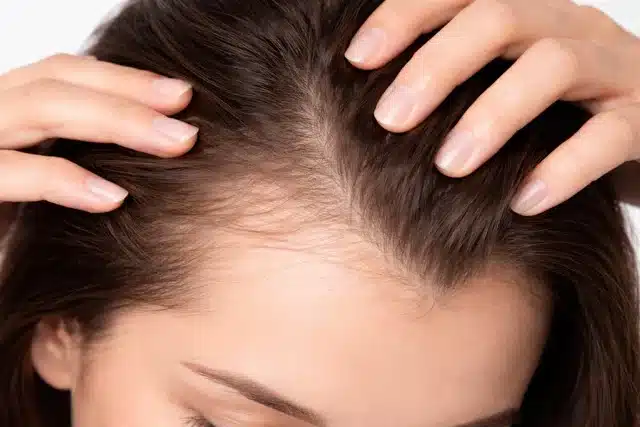
Androgenic alopecia is a genetically influenced form of hair loss driven by hormonal sensitivity at the level of the hair follicle. Over time, affected follicles become smaller, produce thinner hairs, and spend less time in the growth phase of the hair cycle.
In women, this often appears as widening of the part or overall thinning at the crown. In men, it typically presents as recession at the temples or thinning at the crown. While the pattern differs, the underlying process is similar—and early intervention is key.
What Is PRP for Hair Loss?
PRP, or platelet-rich plasma, is a treatment derived from your own blood. Platelets are rich in growth factors that play a critical role in tissue repair, inflammation reduction, and cell signaling.
When introduced into the scalp, PRP helps:
- Stimulate dormant or weakened hair follicles
- Prolong the growth phase of the hair cycle
- Improve hair thickness and density over time
Because PRP uses your body’s own platelets, it is a natural option with minimal risk of allergic reaction.
How the PRP Procedure Is Performed
PRP treatment is an in-office procedure performed in several steps:
- Blood Draw
A small amount of blood is drawn from your arm, similar to routine lab work. - Centrifugation
The blood is placed into a centrifuge, where it is spun to separate the platelet-rich plasma from other blood components. - Application to the Scalp
The concentrated platelets and growth factors are then introduced into areas of hair thinning. This can be done through:- Targeted injections, or
- Microneedling, which creates microchannels in the scalp to enhance absorption
The method used depends on your degree of hair loss, scalp condition, and treatment goals.
What Is the Treatment Schedule?
PRP is not a one-time treatment. For best results, consistency is essential.
- Initial treatment phase:
Three sessions spaced approximately every 6 weeks - Maintenance phase:
One to two sessions per year to sustain results and support ongoing hair growth
Hair growth is gradual. Most patients begin noticing reduced shedding and improved hair quality within a few months, with continued improvement over time.
Downtime and Aftercare
PRP for hair loss requires minimal downtime, making it easy to fit into a busy lifestyle.
- Expect 1 day of downtime with mild scalp tenderness or tightness
- Post-procedure discomfort is typically mild and can be managed with acetaminophen (Tylenol)
- Patients should avoid NSAIDs, such as ibuprofen or naproxen, for at least 3 days after treatment, as these medications can interfere with the inflammatory healing response needed for PRP to work effectively
Most patients return to normal activities the next day.
Who Is a Good Candidate for PRP?
PRP works best for patients in the early to moderate stages of androgenic alopecia who still have functioning hair follicles. It is often used alone or in combination with other hair-loss therapies for enhanced results.
A thorough evaluation is important to determine whether PRP is the right option for you and to rule out other contributing causes of hair loss.
A Personalized Approach to Hair Restoration
At Rangel Dermatology, Dr. Lauren Rangel takes a personalized, evidence-based approach to hair loss treatment. PRP therapy is carefully tailored to your pattern of hair loss, scalp health, and long-term goals.
Hair loss does not have to be accepted as inevitable. With early intervention and the right treatment plan, it is possible to slow progression and support healthier, stronger hair.
Natural regeneration. Thoughtful care. Long-term results.