
A Complete Guide from Board-Certified Dermatologist Dr. Lauren Rangel
Introduction
If you’ve ever dealt with itchy, dry, inflamed skin, you know eczema can be much more than a simple rash. The itching can keep you awake at night, interfere with work or school, and make you feel self-conscious about your skin.
At Rangel Dermatology, eczema (also known as atopic dermatitis) is one of the most common conditions I treat. While there is currently no cure, we now have more effective treatments than ever before—from simple skincare routines to advanced biologic medications that have transformed the lives of many patients.
Whether your eczema is mild or severe, understanding why it happens is the first step toward getting it under control.
What Is Eczema?
Atopic dermatitis is a chronic inflammatory skin condition caused by two major problems: (1) a weakened skin barrier and (2) an overactive immune system.
Think of your skin like a brick wall. The skin cells are the bricks, while fats and proteins—particularly ceramides and filaggrin—act as the mortar holding everything together. Healthy skin keeps moisture inside while preventing allergens, bacteria, irritants, and pollutants from entering.
In eczema, that protective wall becomes ‘leaky.’ Water escapes through the skin (transepidermal water loss, or TEWL), leading to dry, cracked skin, while allergens and irritants penetrate more easily, triggering inflammation and itching.
The Itch-Scratch Cycle
Barrier damage leads to dryness, inflammation, itching, scratching, and even more barrier damage. Over time, repeated scratching can cause thickened skin (lichenification). Breaking this cycle is one of the primary goals of treatment.
What Does Eczema Look Like?
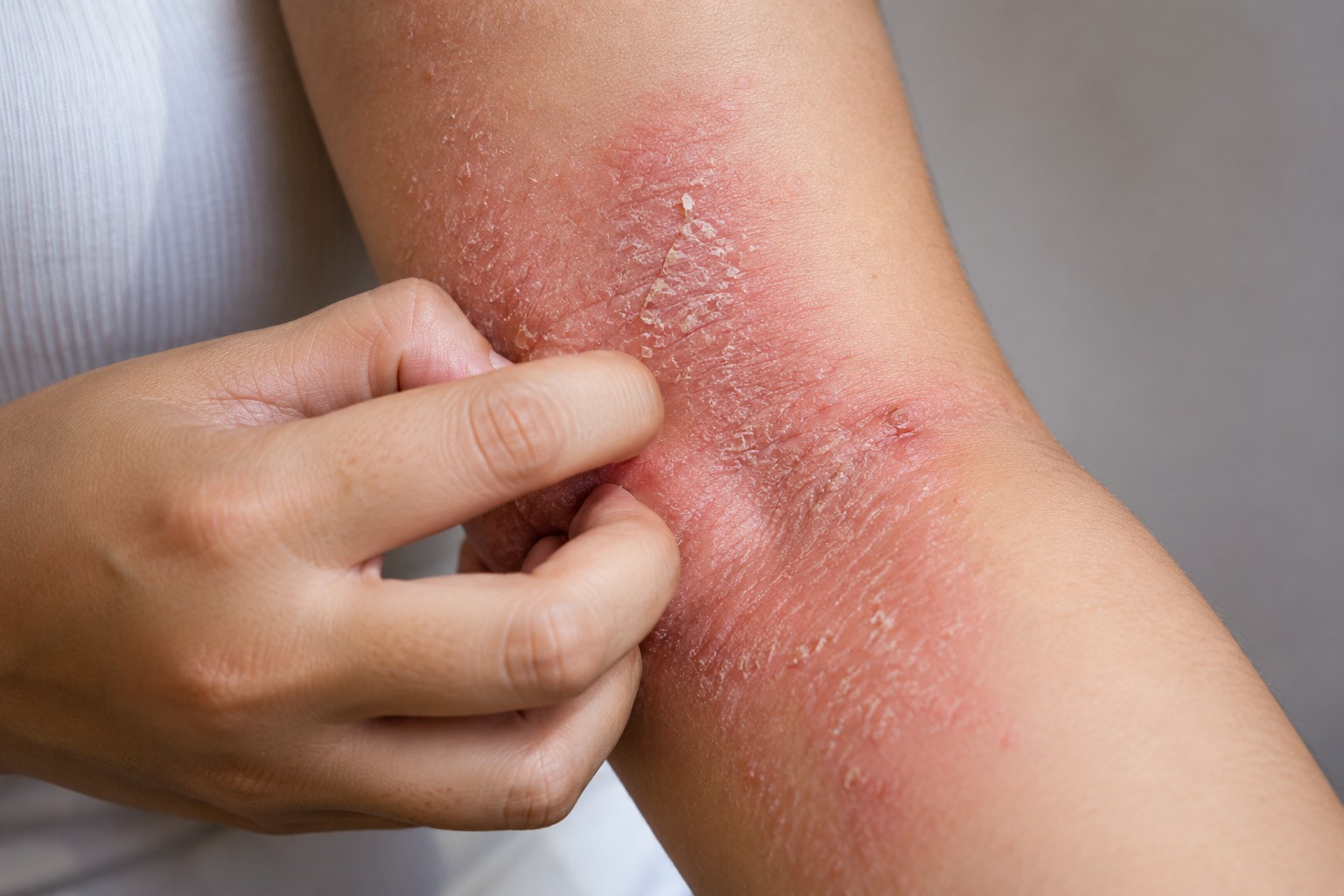
Common symptoms include red or pink patches, dry flaky skin, rough or thickened skin, cracking, intense itching, small bumps or blisters, and sometimes oozing or crusting during severe flares. In darker skin tones, eczema may appear brown, gray, or purple rather than bright red.
Where Does Eczema Occur?
Infants commonly develop eczema on the cheeks, scalp, arms, and legs. Children often develop eczema inside the elbows, behind the knees, neck, wrists, and ankles. Adults frequently develop eczema on the hands, eyelids, neck, inner elbows, behind the knees, feet, and face. Hand eczema is especially common among healthcare workers, hairstylists, parents, and anyone who washes their hands frequently.
Common Triggers
Common triggers include heat, sweating, stress, fragrances, harsh soaps, hot showers, frequent handwashing, wool clothing, dust mites, pet dander, seasonal allergies, illness, dry winter air, and certain cosmetics.
Why Eczema Can Be Worse in Miami
Miami’s warm climate presents unique challenges. Sweat contains salts that can irritate inflamed skin and intensify itching. Many patients notice flares after outdoor activities or exercise. Showering after sweating and moisturizing promptly can help reduce flares.
Managing Eczema
Building a Healthy Skin Barrier
Repairing the skin barrier is a cornerstone of eczema management. Moisturize at least twice daily, apply moisturizer immediately after bathing, take short lukewarm showers, use fragrance-free cleansers, and avoid heavily fragranced skincare products.
Favorite Moisturizers
I frequently recommend Vanicream Moisturizing Cream, CeraVe Moisturizing Cream, La Roche-Posay Lipikar Balm AP+, Aquaphor®, and Vaseline®. The best moisturizer is ultimately the one you’ll use consistently.
Prescription Treatments
Topical corticosteroids remain the cornerstone of eczema treatment. Different body areas require different steroid strengths, and when used appropriately under the guidance of a board-certified dermatologist, they are safe and highly effective.
Steroid-Sparing Treatments
For sensitive areas like the face and eyelids, non-steroid medications are often preferred. Tacrolimus (Protopic®) is a calcineurin inhibitor that does not cause skin thinning. Crisaborole (Eucrisa®) is a PDE-4 inhibitor for mild-to-moderate eczema. Ruxolitinib (Opzelura®), a topical JAK inhibitor, is one of the newest treatments and often provides rapid improvement in itching and redness.
The Eczema Treatment Ladder
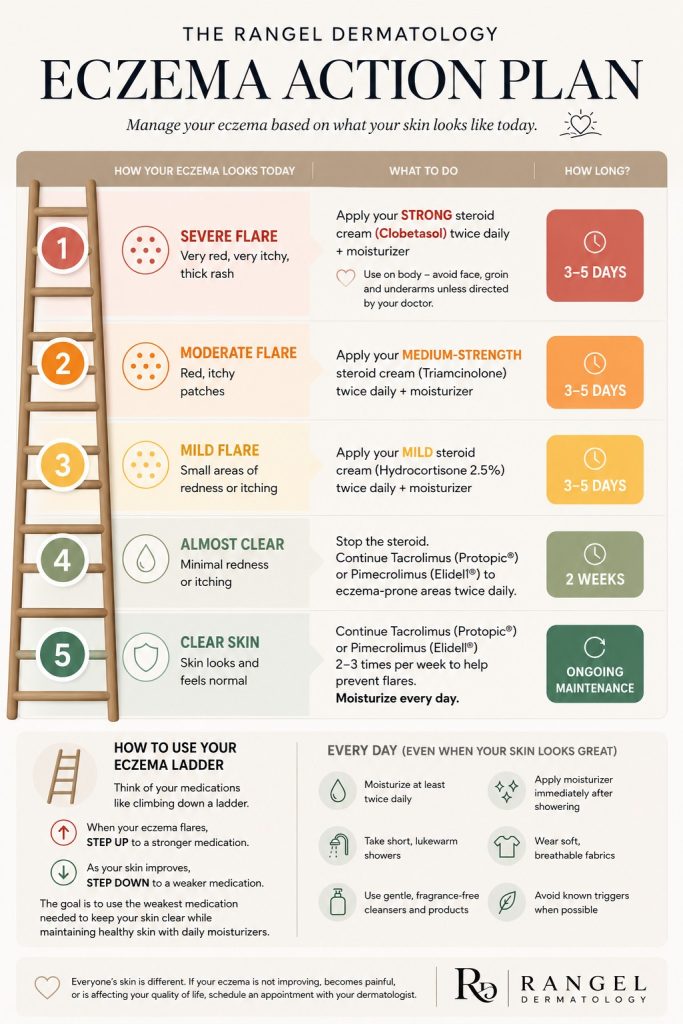
One treatment strategy I frequently use is the Eczema Treatment Steroid Ladder. Rather than using the same medication continuously, patients ‘step up’ treatment during flares and ‘step down’ as the skin improves. This approach empowers patients to manage eczema at home while minimizing unnecessary steroid exposure.
Advanced Therapy: Dupixent®
Dupixent® (dupilumab) is an injectable biologic that blocks IL-4 and IL-13 signaling. Adult dosing begins with a 600 mg loading dose followed by 300 mg every two weeks. Common side effects include injection-site reactions, conjunctivitis, dry eyes, eyelid inflammation, and occasional cold sores. Routine laboratory monitoring is not required.
Can Diet Cause Eczema?
Diet plays a role for some patients, particularly young children with confirmed food allergies, but routine elimination diets are not recommended for most patients.
When Should You See a Dermatologist?
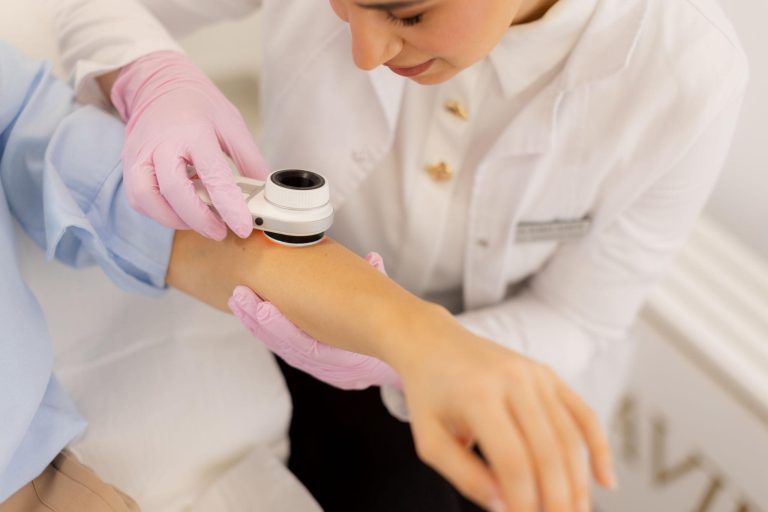
Seek evaluation if eczema is persistent, severe, interfering with sleep, becoming infected, or not responding to over-the-counter therapy.
Personalized Eczema Care at Rangel Dermatology
Every patient is evaluated personally by Dr. Lauren Rangel. Whether you need skincare guidance, prescription topicals, or advanced therapies like Dupixent®, treatment is individualized to restore the skin barrier, reduce itching, and improve quality of life.
Frequently Asked Questions
Is eczema contagious?
No. Eczema is not contagious.
Can adults develop eczema?
Yes. Adult-onset eczema is common.
Why does eczema itch so much?
Inflammation and barrier dysfunction activate itch pathways, and scratching worsens inflammation.
Should I moisturize even when my skin looks clear?
Yes. Daily moisturization helps prevent future flares.
Are topical steroids safe?
Yes, when used appropriately under dermatologic supervision.
Can eczema be cured?
There is no permanent cure, but excellent long-term control is achievable.
Is Dupixent a steroid?
No. It is a targeted biologic medication.
Can sweating make eczema worse?
Yes—especially in hot climates like Miami.
When should I schedule an appointment?
If your eczema is persistent, severe, infected, affecting sleep, or impacting your quality of life.