
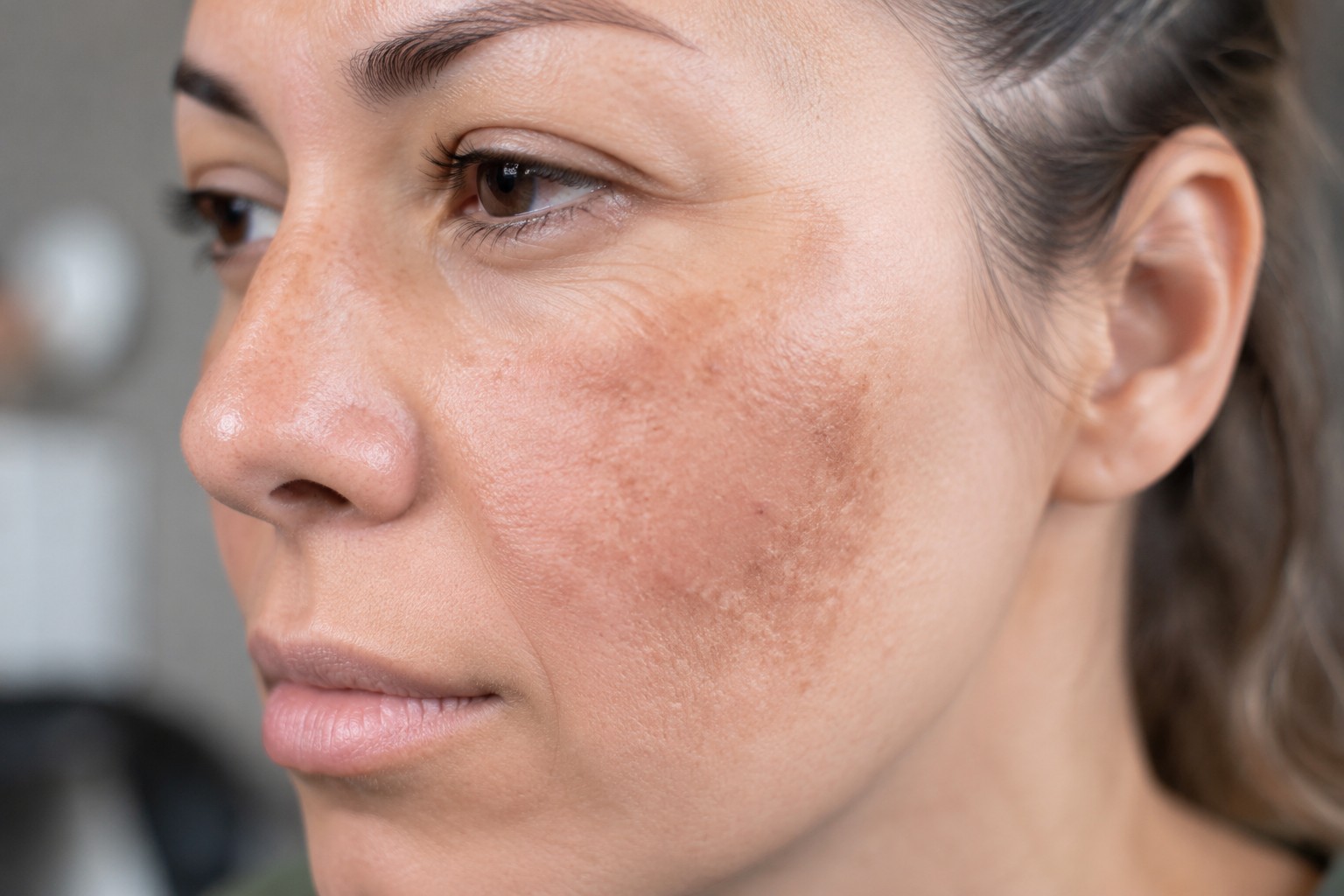
Melasma is a common acquired skin condition that causes symmetric patches of brown, gray-brown, or tan discoloration, most often on the face. While melasma is not dangerous, it can be frustrating and difficult to treat, particularly because it has a tendency to recur even after successful treatment.
Melasma is particularly common in Miami and South Florida, where year-round sun exposure, heat, and visible light can contribute to the development and worsening of facial pigmentation.
At Rangel Dermatology, we specialize in melasma treatment in Miami using personalized treatment plans tailored to each patient’s skin type, lifestyle, and goals.
What Does Melasma Look Like?
Melasma typically appears as symmetric patches of discoloration on sun-exposed areas of the face. The pigmentation can range from light brown to dark brown or gray.
There are three common patterns of melasma:
Centrofacial Pattern
The most common type, affecting the:
- Forehead
- Cheeks
- Nose
- Upper lip
- Chin
Malar Pattern
Primarily affects the cheeks and nose.
Mandibular Pattern
Involves the jawline and lower face.
Many patients initially notice melasma as persistent dark patches on the face that gradually worsen over time, especially after sun exposure, pregnancy, or hormonal changes.
What Causes Melasma?
The exact cause of melasma remains unknown. However, researchers believe that ultraviolet (UV) radiation and visible light activate overactive melanocytes (pigment-producing cells), causing them to produce excess melanin.
Melasma is considered a chronic pigmentary disorder influenced by a combination of genetic, hormonal, and environmental factors.
At our Miami dermatology practice, melasma is one of the most common causes of facial hyperpigmentation that we evaluate and treat. Many patients seek treatment after noticing dark patches that become more prominent during the summer months, after pregnancy, or while taking hormonal medications.
Common Melasma Triggers
Several factors can worsen or trigger melasma, including:
Sun Exposure
Ultraviolet radiation is one of the most significant triggers of melasma and can worsen existing pigmentation. This is especially important for patients living in Miami and South Florida, where UV exposure occurs year-round.
Visible Light
Unlike many pigment disorders, melasma can also be aggravated by visible light, particularly blue light from sunlight. Visible light may stimulate pigment-producing cells and contribute to persistent discoloration.
This is one reason melasma treatment in Miami can be particularly challenging, as patients are exposed to intense sunlight and visible light throughout the year.
Heat
Many patients notice worsening of melasma during the summer months or with activities that generate heat, such as outdoor exercise, hot yoga, saunas, boating, pickleball, tennis, or prolonged cooking. Heat may stimulate pigment production even in the absence of direct sun exposure.
Hormones
Hormonal influences play a major role in melasma development. Common hormonal triggers include:
- Pregnancy
- Birth control pills
- Hormone replacement therapy
Melasma is often referred to as the “mask of pregnancy” because it commonly develops or worsens during pregnancy.
Genetics
Melasma frequently runs in families, suggesting a strong genetic component.
Thyroid Disease
Some studies have found an association between melasma and thyroid dysfunction.
Certain Medications
Certain medications, including phenytoin and some phototoxic medications, may contribute to melasma development in susceptible individuals.
Why Is Melasma So Common in Miami?
Melasma is particularly common in South Florida, where year-round sunshine, high temperatures, and outdoor lifestyles create the perfect environment for pigmentation to develop and persist.
Miami residents are exposed to significantly more ultraviolet radiation throughout the year compared with many other parts of the country. In addition, heat itself may worsen melasma, even in the absence of direct sun exposure. Many patients notice their pigmentation darkens during the summer months, after beach vacations, outdoor exercise, boating, tennis, pickleball, or other activities that increase skin temperature.
South Florida’s intense sunlight also exposes the skin to high levels of visible light, which has been shown to worsen melasma by stimulating pigment-producing cells.
For these reasons, melasma can be particularly challenging to manage in Miami and often requires a comprehensive treatment approach that includes sun protection, prescription therapies, and ongoing maintenance.
Types of Melasma
Melasma can be classified based on the depth of pigment within the skin.
Epidermal Melasma
Pigment is located in the upper layers of the skin and generally responds best to treatment.
Dermal Melasma
Pigment is deeper within the skin, making treatment more challenging.
Mixed Melasma
Contains both epidermal and dermal pigment and is the most common type seen in practice.
Indeterminate Melasma
Occurs when the depth of pigment cannot be clearly classified.
Melasma Treatment in Miami
Because melasma is influenced by sun exposure, visible light, heat, hormones, and genetics, treatment often requires a personalized approach.
At Rangel Dermatology, we create customized melasma treatment plans for patients throughout South Miami, Pinecrest, Kendall, Coral Gables, and the greater Miami area.
Sun Protection
Daily sunscreen use is the foundation of melasma treatment.
Patients with melasma should use:
- Tinted broad-spectrum SPF 30 or higher
- Daily application, even on cloudy days
- Frequent reapplication when outdoors
Because visible light can worsen melasma, tinted sunscreens containing iron oxides are often recommended as part of treatment.
Customized Prescription Compounded Creams
One of the most effective treatments for melasma is a customized prescription compounded cream created specifically for each patient.
Rather than relying on a one-size-fits-all approach, Dr. Rangel carefully selects and combines multiple pigment-fighting ingredients into a single prescription cream based on your skin type, pigmentation pattern, treatment history, skin sensitivity, and treatment goals.
Depending on your individual needs, your customized formulation may include ingredients such as:
- Hydroquinone
- Tretinoin
- Tranexamic acid
- Kojic acid
- Topical corticosteroids
By combining these ingredients into one tailored treatment, we can target multiple pathways involved in melasma development, helping to reduce pigment production, accelerate skin cell turnover, improve discoloration, and maximize results.
Because melasma varies significantly from person to person, treatment plans are individualized. Factors such as skin type, depth of pigmentation, previous treatments, lifestyle, and sensitivity to medications are all considered when designing your custom prescription.
At Rangel Dermatology, one of the advantages of treatment is the ability to create customized compounded formulations specifically tailored to each patient’s unique presentation of melasma rather than relying solely on commercially available products.
Chemical Peels
Chemical peels are frequently used as part of a comprehensive melasma treatment plan.
For appropriately selected patients, a series of professional chemical peels can help improve epidermal pigmentation, accelerate skin cell turnover, and enhance the effectiveness of prescription topical medications. Glycolic acid peels are among the most commonly used peels for melasma and can help gradually brighten the skin and improve uneven pigmentation when performed as part of a carefully designed treatment regimen.
Because melasma can sometimes worsen with excessive irritation or inflammation, chemical peels should be selected and performed by a dermatologist experienced in treating pigmentary disorders. Treatment recommendations are individualized based on skin type, pigmentation depth, and overall treatment goals.
Microneedling with Tranexamic Acid
Microneedling with tranexamic acid can be an excellent option for patients with stubborn melasma or those looking to enhance the results of their topical treatment regimen.
During the procedure, tiny microchannels are created in the skin, allowing tranexamic acid—a well-studied ingredient for melasma—to penetrate more effectively into the areas of pigmentation. Tranexamic acid works by targeting several pathways involved in melasma development and has become an increasingly popular treatment for facial hyperpigmentation.
In addition to helping improve discoloration, microneedling can stimulate collagen production and improve overall skin texture and quality. Several studies have demonstrated that microneedling combined with tranexamic acid may improve melasma severity and complement other treatment modalities.
At Rangel Dermatology, microneedling with tranexamic acid is often incorporated into a comprehensive melasma treatment plan that may also include customized prescription compounded creams, strict sun protection, visible light protection, and maintenance therapy. Treatment recommendations are individualized based on the patient’s skin type, pigmentation pattern, and treatment goals.
Why Is Melasma So Difficult to Treat?
Melasma is a chronic condition with a tendency to recur. Even after successful treatment, ongoing sun protection and maintenance therapy are often necessary to prevent relapse.
This is especially true in Miami, where year-round sun exposure, visible light exposure, and heat can continuously stimulate pigment production.
The good news is that with a personalized treatment plan and consistent sun protection, most patients can achieve significant improvement.
When Should You See a Dermatologist?
If you have persistent dark patches on your face that are not improving with over-the-counter products, it may be time to see a board-certified dermatologist. Early evaluation can help determine whether you have melasma, post-inflammatory hyperpigmentation, or another cause of facial discoloration.
At Rangel Dermatology, Dr. Lauren Rangel provides personalized melasma treatment in Miami using evidence-based therapies designed to improve pigmentation while minimizing irritation and recurrence.
If you are looking for a Miami dermatologist experienced in treating melasma, facial hyperpigmentation, and dark spots on the face, contact Rangel Dermatology to schedule a consultation